Most commercial building owners know their HVAC system by heart — they've replaced components, adjusted thermostats, and called service technicians more times than they can count. What they often overlook is the building envelope itself.
In many cases, the HVAC isn't the problem. The insulation is.
Sign 1: Energy Bills That Keep Climbing
A steady year-over-year increase in heating and cooling costs — without a corresponding increase in occupancy or square footage — is one of the clearest signals of envelope degradation. According to the U.S. Department of Energy, buildings with inadequate insulation can lose up to 40% of conditioned air through the building envelope.
Insulation doesn't fail overnight. It settles, compresses, absorbs moisture, and slowly loses its R-value over years of exposure. By the time you notice a 20–30% increase in utility costs, you're likely looking at significant insulation performance loss.
Sign 2: Inconsistent Temperatures Across Floors or Zones
If the second floor of your building runs 10 degrees warmer than the first, or if north-facing offices are perpetually cold while south-facing ones are too warm, thermal bridging and insulation gaps are the likely culprits.
This is particularly common in buildings constructed before the 1990s, when insulation standards were significantly less rigorous than today's ASHRAE 90.1 energy code requirements.
Sign 3: Moisture, Condensation, or Mold Issues
Insulation does more than slow thermal transfer — it also manages vapor movement through the building envelope. When insulation fails or is absent, warm moist air hits cold surfaces inside the wall cavity, creating condensation. The EPA's guidance on mold in commercial buildings recommends addressing moisture and insulation issues at their source rather than treating the symptoms alone.
If you're seeing interior condensation on exterior walls, peeling paint near ceiling-wall junctions, or musty odors in specific areas, have the insulation in those zones inspected before addressing the symptom.
Sign 4: An HVAC System That Runs Constantly
Your HVAC system is sized for a specific heat load — the rate at which heat enters or leaves your building. When the envelope degrades, the heat load increases, and your system runs longer cycles trying to compensate.
If your mechanical contractor is recommending a larger HVAC unit to "keep up" with demand, get an energy audit first. Upgrading the insulation is almost always more cost-effective than upsizing mechanical equipment — and it may qualify your building for ENERGY STAR certification or utility rebate programs.
Sign 5: The Building Is More Than 20 Years Old
If your building hasn't had an insulation inspection in two decades, it almost certainly has performance gaps. Building energy codes have tightened significantly since the 1990s, and many older buildings were built to standards that are now considered inadequate.
Even well-installed insulation from the 1990s may have settled, been disturbed by plumbing or electrical work, or been compromised by roof leaks or pest activity over the years.
What an Upgrade Actually Involves
Energy audit and thermal imaging to map heat loss
Moisture testing of existing insulation
Removal of failed or wet insulation
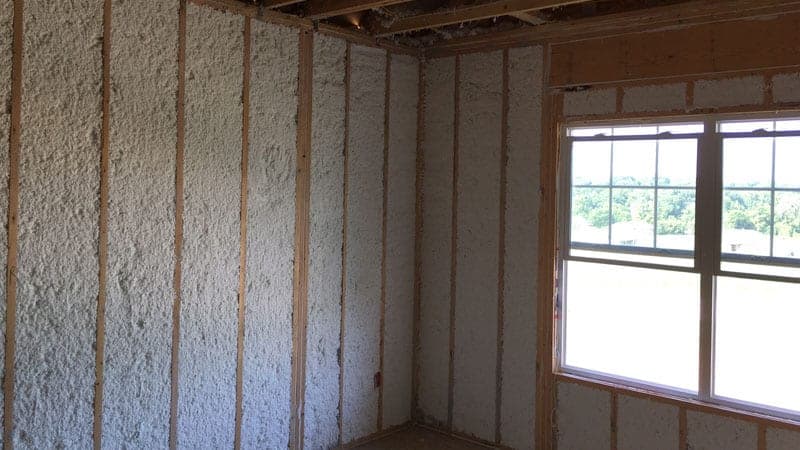
Spray foam air sealing at penetrations and transitions
Installation of appropriate insulation type by zone
Post-installation verification and documentation
The Henges insulation team has been performing commercial upgrades since 1932. We work within occupied buildings when required, coordinate with your mechanical contractor, and document everything for utility incentive programs that can offset a significant portion of your upgrade cost. Contact us to schedule an insulation assessment.