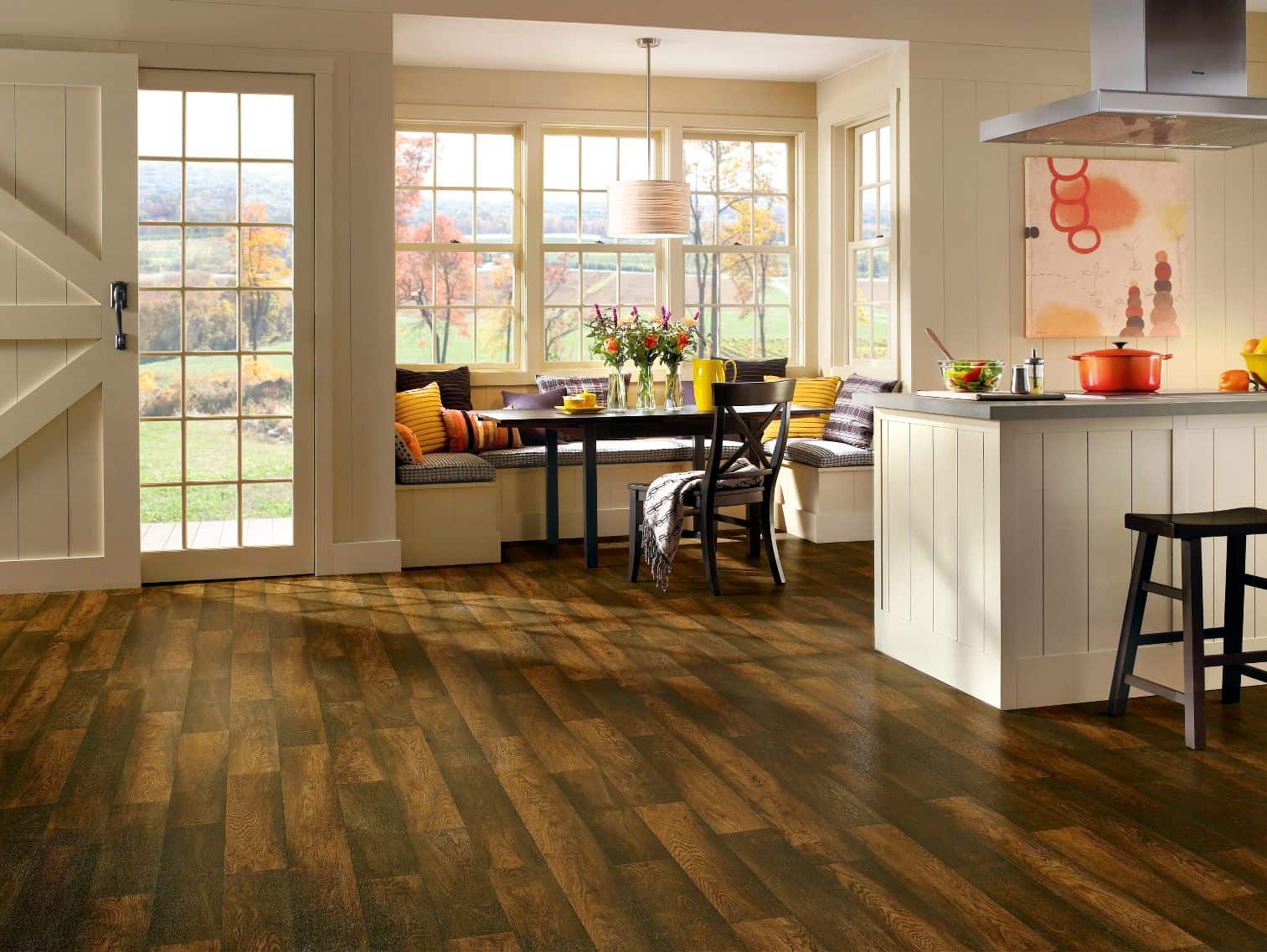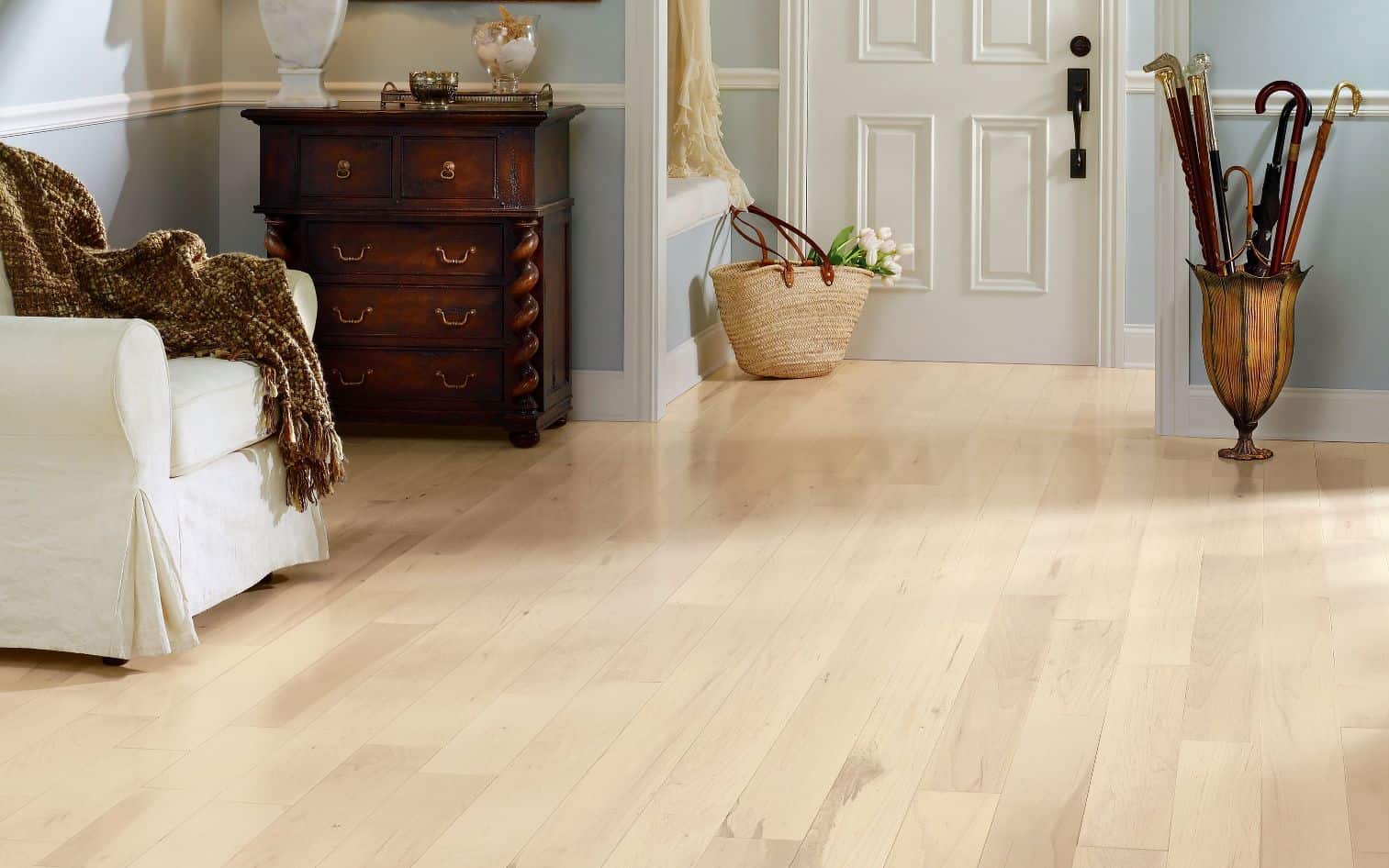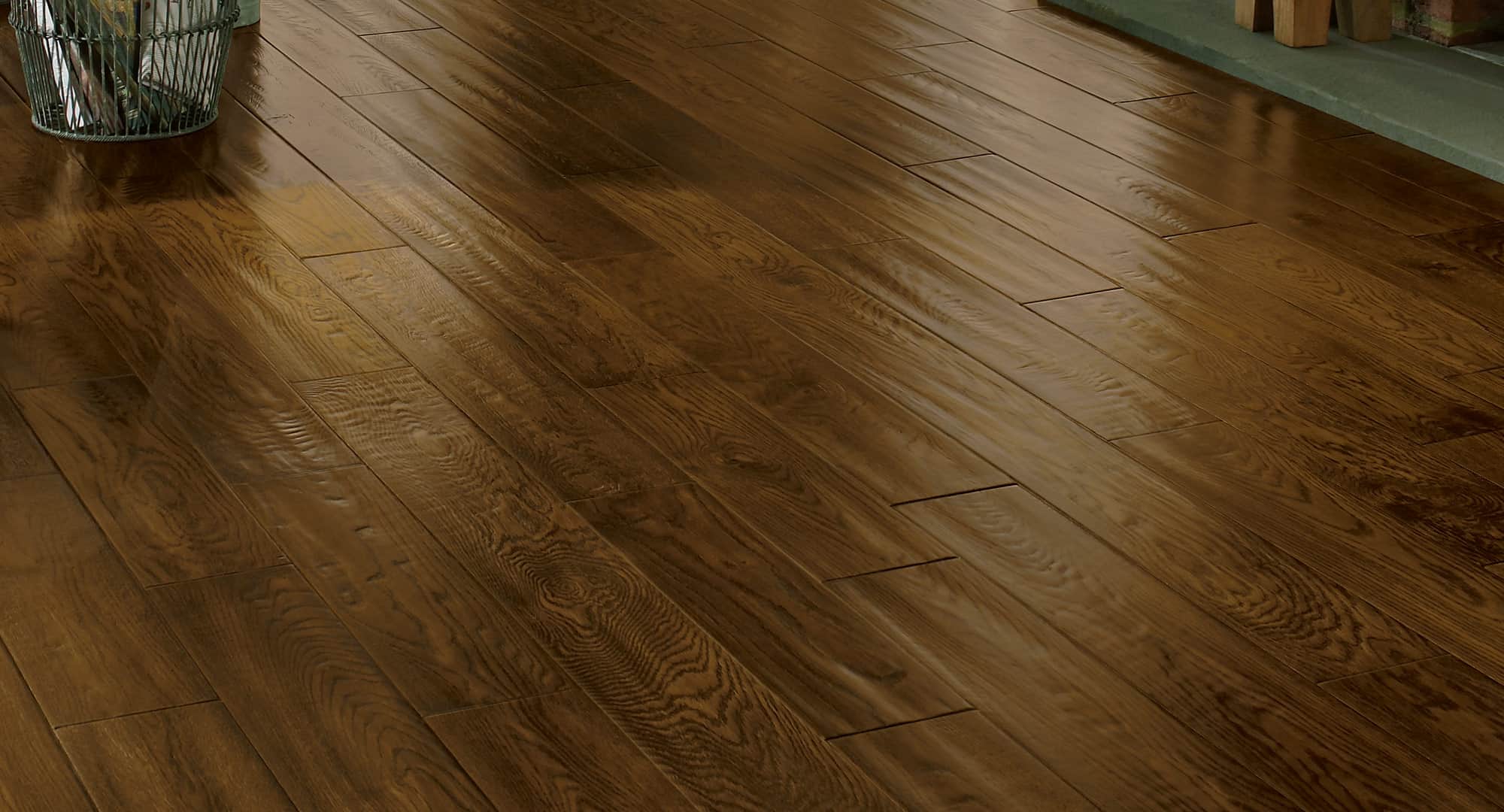
Whether you call it hardwood flooring, wood floors, real wood, solid hardwood, engineered hardwood, plank flooring or timber flooring, every wood floor shares one defining trait: wood is hygroscopic. It constantly reacts to the moisture — the relative humidity — in your home's environment. In a comfortable home with slight humidity variations through the seasons, wood flooring responds by expanding and contracting, and those changes may be noticeable.
During warm, humid weather wood expands. During colder, dry weather wood shrinks. This seasonal movement is a normal characteristic of wood flooring and it never stops, regardless of the age of the wood. With the wide variation of weather in the St. Louis area, homeowners can expect changes in their wood floor throughout the seasons.
Why does my hardwood floor gap, squeak or creak?
Gapping, squeaking and creaking occur as the floor expands and contracts with seasonal humidity. It is normal, not a defect. One of the best ways to ensure wood flooring will continue to perform at a high level of expectation is to control the humidity in the home and properly maintain your floors with approved cleaning products and methods.
What temperature and humidity are best for hardwood floors?
Wood floors perform best when the interior environment's relative humidity is kept between 35% and 50%, and the temperature range from 60–80°F is acceptable. The ideal conditions are narrower:
Relative humidity: 45% – 50% Rh
Temperature: 68°F – 72°F
It is extremely important to avoid major swings in temperature and humidity. Keep the environment surrounding your wood floor at the normal living conditions described above, year-round — including while the house is vacant or between tenants.
How do you control humidity for a wood floor?
Heating systems, air exchanges, air conditioning, humidifiers, dehumidifiers and thermostats are all examples of mechanical systems that can be used to control your home's environmental conditions. Most wood manufacturers also recommend leaving the HVAC fan switch in the “On” position to help provide a flow of air across the floor.
In St. Louis that usually means running a humidifier through the dry winter months and a dehumidifier or air conditioning through humid summers. The goal isn't a perfect number — it's avoiding the swing between extremes.
What happens when conditions aren't maintained?
The key to preventing future problems with your hardwood flooring is keeping the home's environment in a normal living condition year-round. If these guidelines are not maintained, damage to your wood floor is most likely to occur. Objectionable appearances can include, but are not limited to:
Cupping — caused by changes in moisture and humidity in or around the home
Cracking, splits and cracks
Gaps at joints
Delamination of ply
Finish issues such as peeling, flaking or chipping
Buckling
Noises emitting from the floor when walked on
How should you clean and maintain a wood floor?
The enjoyment of wood flooring depends on some routine but minimal maintenance details.
Sweep your floors or use a dust mop daily.
Vacuum your floor regularly, as often as you would vacuum carpets.
Clean your floor's coated surface with a lightly dampened cloth, using a recommended cleaning product according to the manufacturer's directions for use.
Clean light stains by rubbing with a damp cloth.
Never let a spill of water dry on the floor.
Apply felt pads on all furniture legs to minimize scratches, and clean the pads periodically to remove accumulated grit.
Floors can be recoated periodically as the finish shows wear.
Just as important — what not to do:
Different finishes have different maintenance requirements. It's best to follow professional advice in this area.
Do not use a household dust treatment — it can make your floors slick or dull the finish.
Never damp mop a wood floor. Water causes deterioration of the wood itself, as well as the finish, and increases the relative humidity in the wood.
What's normal in a wood floor and what isn't?
Wood is a natural product, and much of what looks like a flaw is simply the material behaving like wood. Expect the following as normal characteristics:
Color and grain variation — solid or engineered, not every board will be uniform. Each board is unique, and stains react differently to each one.
Board length and species variation — some species naturally show color and shade variation, and manufacturers produce styles in various sizes and lengths.
Seasonal gapping — gaps between boards may appear and disappear as the seasons change.
Checking — some boards may show minor cracks in the finish, often near the ends. Minimal checking can occur and is not covered under manufacturer warranties.
Scratches and dents — all wood floors, regardless of type, species or finish, will show scratches and dents. Walk-off mats at doors, regular sweeping, and felt protectors on chairs and furniture minimize them.
Moldings and trims — stair nosings, transitions and floor vents are made to coordinate with your wood but come from a different factory and different wood, so a noticeable color difference is possible.
Floating floors — a floating floor is not attached to the subfloor. It can move and will have a more hollow sound underfoot than a fastened floor.
Every one of these points is documented in the General Flooring Clarifications we hand out with each project — download it and keep it with your contract.
Frequently Asked Questions
What humidity should hardwood floors be kept at?
Keep relative humidity between 45% and 50% and the temperature between 68°F and 72°F. A broader range of 35–50% Rh and 60–80°F is acceptable, but the closer you hold the ideal range year-round, the less your floor will move.
Why are there gaps between my hardwood boards in winter?
Cold, dry winter air pulls moisture out of the wood and the boards shrink, opening gaps at the joints. This is normal seasonal movement and it typically closes back up when humidity rises in spring and summer. Running a humidifier to hold 45–50% Rh keeps the gaps to a minimum.
Can you damp mop or wet mop a hardwood floor?
No. Never damp mop a wood floor. Water causes deterioration of the wood itself and the finish, and it raises the relative humidity inside the wood. Clean the coated surface with a lightly dampened cloth and a manufacturer-recommended cleaner instead.
What is cupping in a hardwood floor?
Cupping is when the edges of a board sit higher than its center, giving the floor a washboard feel. It's caused by changes in moisture and humidity in or around the home — usually more moisture beneath the floor than above it. Controlling humidity levels in your home will help minimize cupping.
Should I leave my HVAC fan on for hardwood floors?
Yes. Most wood manufacturers recommend leaving the HVAC fan switch in the “On” position to provide continuous airflow across the floor, which evens out temperature and humidity between rooms and between the floor's surface and its underside.
Are small cracks in the finish covered under warranty?
Minimal checking — minor cracks in the finish, often near the ends of boards — can occur and is not covered under manufacturer warranties. Henges warrants installation workmanship for one year from the date of installation; product defects are governed by the manufacturer's warranty, which we pass along to you.
More floor care resources
Resilient Floor Education — care and cleaning for LVP, LVT, vinyl plank and laminate floors.
LVP vs. hardwood: a contractor's comparison — how the two stack up on cost, durability and specification.
Warranty & Disclaimers — download Understanding Your Wood Floors and the full set of product disclaimers.
Visit a showroom — see hardwood species and finishes in person in Earth City, Washington or O'Fallon.
Questions about your specific floor? Contact Henges Interiors — three generations of St. Louis homeowners have asked us the same things, and we're happy to walk you through it.