Resilient flooring is one of the most popular floors going into St. Louis homes right now — and one of the most confusingly named. Depending on who you ask, the same floor gets called luxury vinyl plank (LVP), luxury vinyl tile (LVT), vinyl plank flooring, sheet vinyl, rigid core or SPC flooring, waterproof flooring, or simply laminate flooring. Whatever name is on your invoice, resilient is a beautiful and durable product — and understanding how it behaves is critical to maintaining its long-term performance and aesthetics. Follow the guidelines below and you should enjoy and protect your investment for years to come.
What is resilient flooring?
Resilient flooring is a category of firm, flexible, non-textile floor covering that includes luxury vinyl plank, luxury vinyl tile, sheet vinyl, and rigid core/SPC products — along with the laminate floors most shoppers group in with them. It is engineered to emulate wood and stone, installs over most subfloors, and is generally the most forgiving hard-surface option for busy households and pets.
If you're still weighing your options, our team walks through the trade-offs in LVP vs. hardwood: a contractor's comparison, or you can see and feel the samples in person at one of our St. Louis-area showrooms.
What should I expect from a resilient floor?
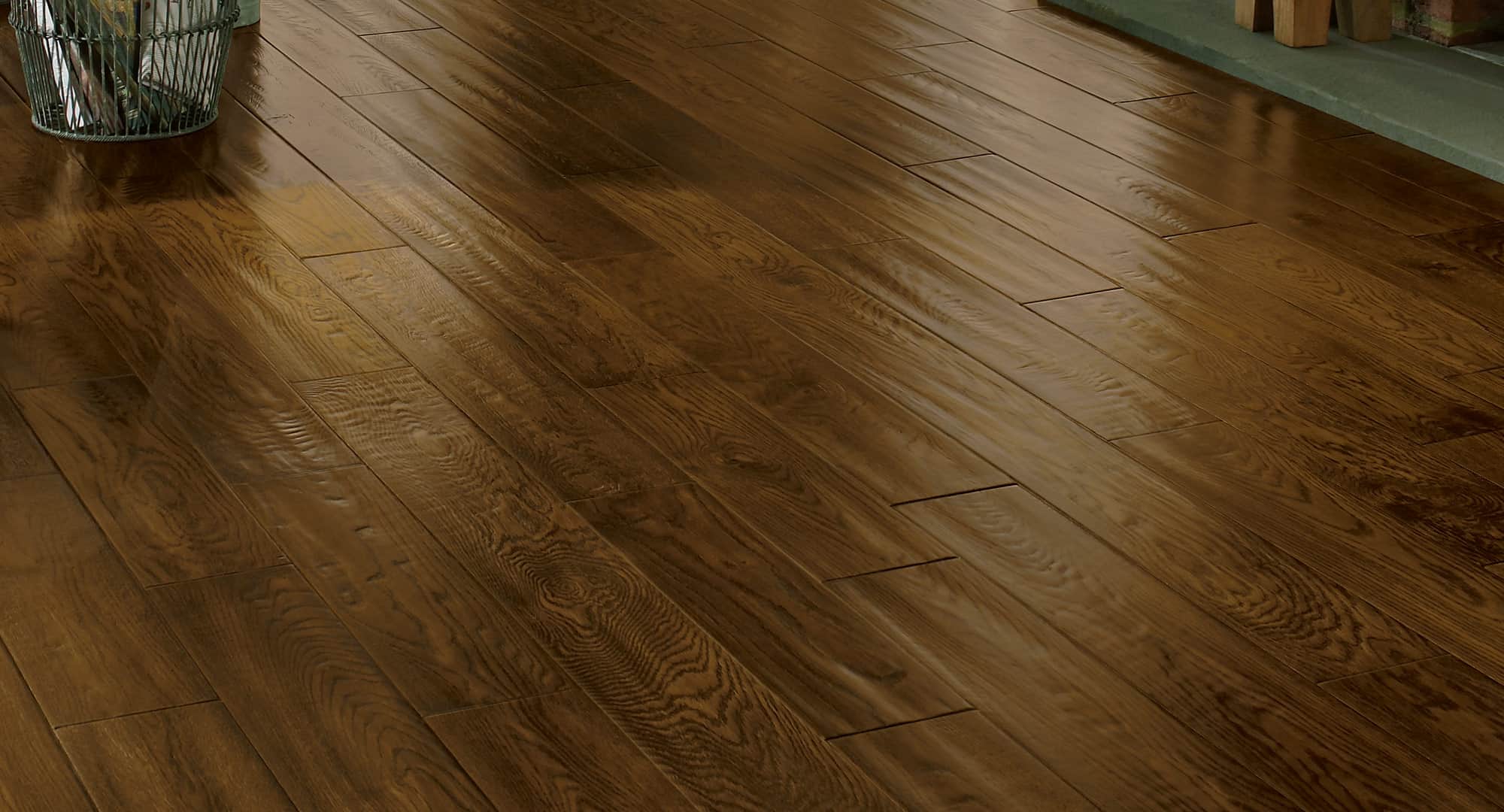
Most resilient flooring is designed to look unique and emulate nature. Expect visual variation and character in nearly every resilient floor — knots, mineral streaks, color variation and differing texture, just to name a few. That character is the product working as designed, not a defect.
Resilient will expand and contract with temperature and humidity.
Resilient products follow current interior design trends, which means a lower gloss level than older vinyl.
Samples are representations — the floor delivered to your home may vary slightly in shade.
What temperature and humidity does resilient flooring need?
Keep the temperature between 55°F and 85°F (13°C–29°C), or an average of about 70°F (21.1°C), and keep relative humidity inside the home between 35% and 55%. The simplest way to remember it: resilient flooring likes to live in the same environments that humans do.
Avoid exposure to direct sunlight for prolonged periods. Failure to do so may result in discoloration and expansion. During peak sunlight hours, drapes or blinds are recommended — excess temperature from direct sun can cause thermal expansion and UV fading.
What does a waterproof warranty actually cover?
This is the single most misunderstood point in resilient flooring. Waterproof warranties apply to topically introduced moisture (top-down) and do not apply to other moisture-related sources inside or outside the structure.
Not covered by a waterproof warranty:
Leaky or sweating pipes
Flooding and roof leaks
Chronic moisture from an icemaker, refrigerator, dishwasher or toilet
Subfloor or slab moisture migrating up from below
Always refer to your manufacturer's warranty for additional information. You can download the original education sheet and every other product disclaimer on our warranty and disclaimers page.
How do you clean resilient flooring?
Most of the soil found on all floors is dry soil, and therefore should be removed using dry methods. Only use damp cleaning methods after the dry soil has been removed.
Sweep, dust or vacuum regularly with the hard floor attachment — not the beater bar — to prevent grit that scratches and dulls the finish. Dry microfiber dust mops are excellent for this.
In very sandy areas, increase how often you dust-mop or vacuum.
Wet soils — the things we eat, drink or track in — usually come up with light moisture and a damp microfiber mop, without detergents.
Blot spills with a damp cloth as soon as they happen. Never allow liquids to stand on your floor.
Periodically clean with a product made specifically for resilient floor care, such as Shaw's R2X Hard Surface Cleaner or a neutral-pH floor cleaner.
Damp mop only, and use distilled water to avoid water spotting.
What should you never do to a resilient floor?
Haze is the most common complaint we see on resilient flooring, and it is almost always caused by improper cleaning products or methods. Harsh chemicals or excessive moisture can damage your floor.
Do not wash or wet-mop with soap, water, or oil-soap detergent — this causes residue haze.
Do not use steel wool, abrasive cleaners, or strong ammoniated or chlorinated cleaners.
Do not use any type of buffing or polishing machine.
Do not wax or polish the floor.
Do not use a steam mop.
How do you remove tough spots?
For oil, paint, markers, lipstick, ink or tar: use isopropyl alcohol on a clean white cloth, then wipe the area with a damp cloth to remove residue.
For candle wax or chewing gum: harden the spot with ice, then gently scrape with a plastic scraper such as a credit card. Be careful not to scratch the surface, then wipe clean with a damp cloth.
How do you protect resilient flooring from damage?
Felt pads on the bottom of furniture legs reduce scuffing and denting. Never allow sharp, pointed or rough-textured objects to contact the floor.
When moving heavy objects or furniture, never drag them across the floor.
Use walk-off matting at all entries to reduce soil and moisture entering the home.
Do not use rubber- or foam-backed plastic mats — they may discolor the finish. Use an approved vinyl rug underlayment to prevent slippage.
Protect the floor from direct sunlight to reduce fading and expansion.
Keep pets' nails trimmed to reduce scratching.
Do not walk on the floor in stiletto heels, spiked golf shoes, or sports cleats. A 100 lb. person in a heel 1/2" in diameter puts 2,000 psi on the floor.
Rolling loads: wheelchairs, office chairs and other wheeled products put high amounts of stress on floor joints and void most vinyl floor warranties. If a rolling chair is unavoidable, use a chair mat rated for resilient flooring.
Frequently Asked Questions
Is resilient flooring the same as laminate flooring?
Not technically, but they're shopped and cared for the same way. Resilient covers vinyl-based products — LVP, LVT, sheet vinyl and rigid core/SPC — while laminate uses a high-density fiberboard core with a printed wear layer. Most homeowners use the terms interchangeably, and the cleaning and protection rules on this page apply to both.
Is LVP really waterproof?
LVP is waterproof against topically introduced (top-down) moisture only. Waterproof warranties do not cover leaky or sweating pipes, flooding, roof leaks, or chronic moisture from an icemaker, refrigerator or toilet. Check your manufacturer's warranty for the specific terms.
Can you steam mop LVP or vinyl plank flooring?
No. Steam mops are specifically not recommended for resilient flooring. Use a damp microfiber mop with a neutral-pH cleaner made for resilient floors instead.
Why does my vinyl floor look hazy after mopping?
Haze on resilient flooring is usually caused by soap, oil-soap detergent, excessive water, or hard-water minerals left behind. Switch to a damp-mop routine with distilled water and a neutral-pH resilient floor cleaner, and stop using any soap-based product.
What humidity should I keep for resilient flooring?
Keep relative humidity between 35% and 55% and the temperature between 55°F and 85°F, averaging around 70°F. Those are the same conditions that keep a home comfortable for people.
Do office chairs damage vinyl plank flooring?
Yes. Rolling loads such as office chairs and wheelchairs put high stress on floor joints and void most vinyl floor warranties. Use a chair mat rated for resilient flooring under any rolling chair.
More floor care resources
Understanding Your Hardwood Floor — humidity, seasonal movement, and daily care for wood floors.
Warranty & Disclaimers — download the original Resilient Floor Education Sheet and every other product disclaimer.
Flooring services — commercial and residential installation across St. Louis and the Midwest.
Book a design appointment — sit down with a Henges specialist and see the products in person.
Still have a question about your floor? Get in touch with the Henges team — we've been answering these questions in St. Louis since 1932.